Battlepay wasn't just built to process payments. It was built to champion players.
That might sound unusual for a game commerce platform, but the founders believed the transaction was only ever one small part of the gaming experience. Players don't keep coming back because they bought a top-up. They come back for the shared experiences they find through the creators they follow, the tournaments they watch or participate in, the rivalries they become part of and the communities they build along the way.
Gaming doesn't end after a purchase, so why should gaming commerce?
That question became the foundation Battlepay was built on.
Doing Things Differently
It became obvious very early that if Battlepay was going to do the same things everyone else was doing, there wasn't much point in building it.
Between CEO and Co-founder Vasu and CMO Co-founder Romeo Miseo, Battlepay brought together experience spanning product, operations, media, marketing and even running an esports organisation. Together, they had worn almost every hat gaming had to offer.
Just as importantly, they were gamers long before they were founders. They had spent years playing games, competing professionally, designing games, working across the industry and building communities around them. Battlepay wasn't born from spotting a market trend. It came from understanding the people who play.
For Vasu, though, the journey had started years earlier. It began with a simple frustration. When Overwatch launched in 2016, he wanted to buy the game but didn't have a credit card. Before UPI became commonplace, he had to borrow a friend's card and repay them in cash. The experience stayed with him. He realised that if he was facing this problem, countless other players probably were too. The demand already existed. Access didn't.
That idea continued to simmer. By 2018, Battlepay had begun taking shape in his mind, but instead of rushing to launch, he waited until the timing, experience and conviction aligned. As he puts it, if you're only thinking about surviving the next month, it's difficult to make the kind of long-term decisions that allow a company to grow.
In 2025, the idea became a company when Vasu and Romeo founded Battlepay.
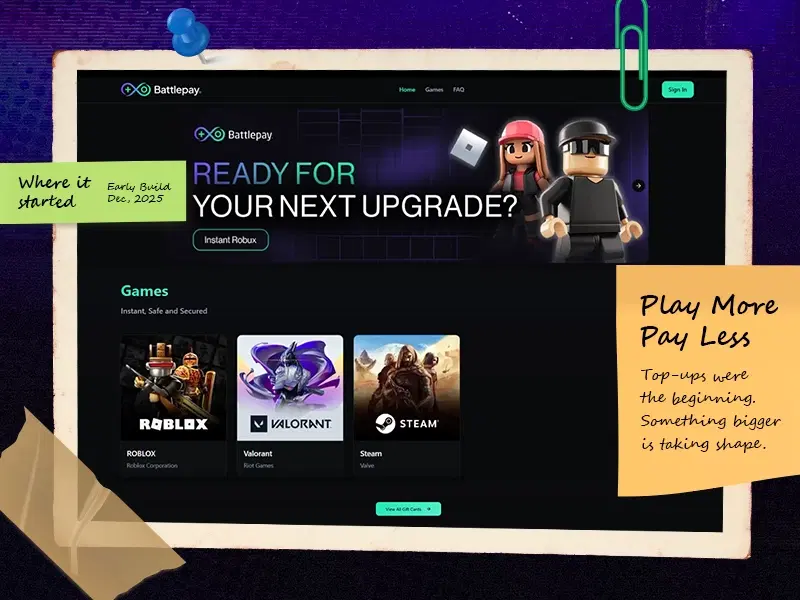
Admittedly, entrepreneurship isn't easy.
“It's mental gymnastics,” Romeo says.
Vasu sees it much the same way. Every business, he believes, comes with its own set of problems. What ultimately defines a company isn't the challenges it faces, but how it chooses to deal with them.
But beneath those challenges was a shared conviction. When they looked at the market, they believed they could build something the Indian market didn't yet have.
The launch reflected that belief.
Starting with limited capital, Battlepay leaned on experience and resourcefulness, particularly within the mobile gaming creator ecosystem.
The website launched through a three-day Early Access campaign for BGMI and Valorant, partnering with 10-12 creators. Instead of leading with blanket discounts, Battlepay borrowed a page from live-service games and leaned into FOMO. Only players with passcodes could access the website.
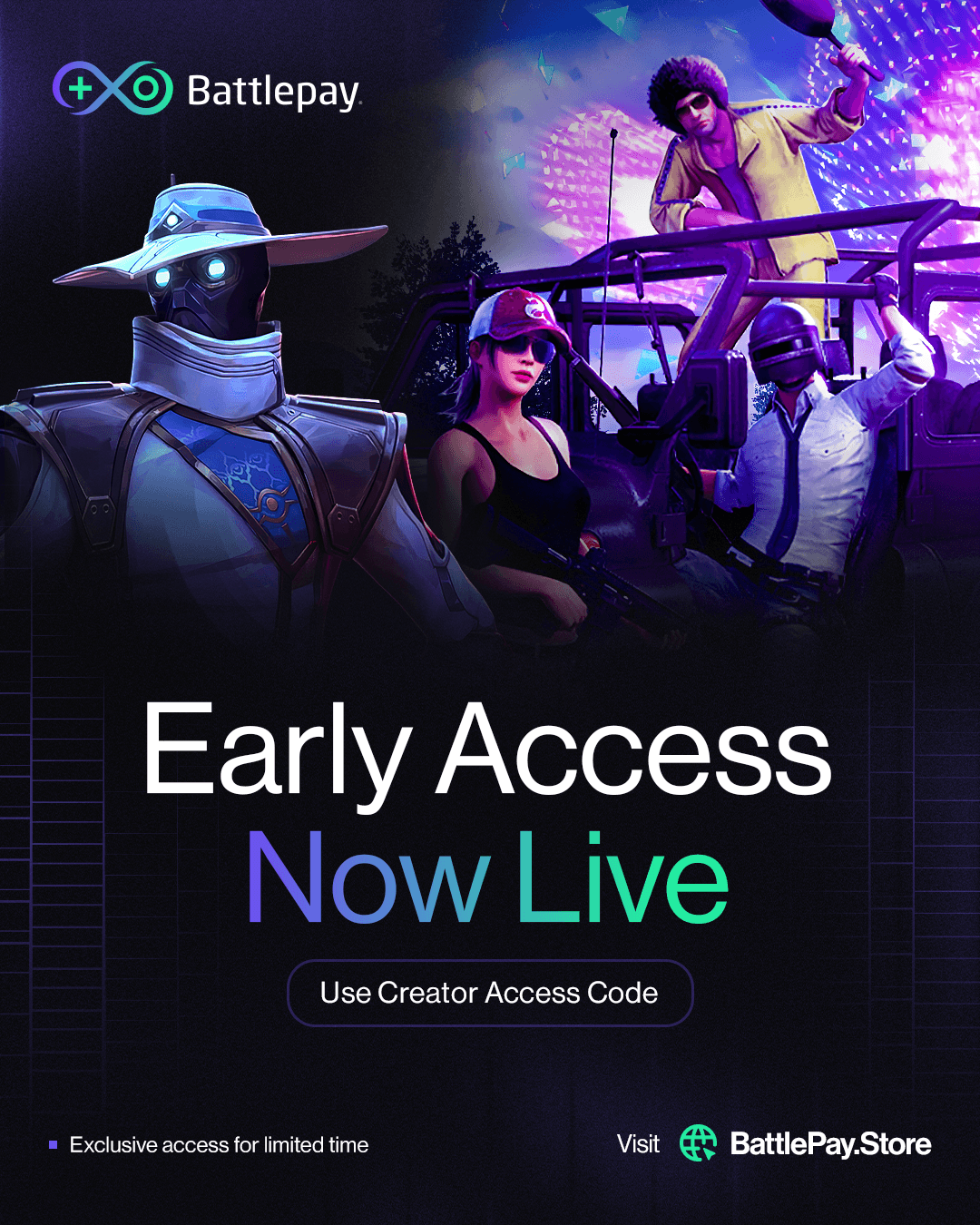
It wasn't just a launch.
It was an event.
Romeo and Vasu obsessed over the experience itself. They didn't hand the website off with a vague brief and hope for the best. Every screen, every interaction, and every piece of copy was shaped around a single question:
What would gamers actually want?
The answer certainly wasn't another generic top-up website.
They knew first impressions matter, especially in gaming.
When Battlepay went live, their belief was quickly validated. Traffic surged beyond what the website was prepared for, and growth continued month after month.
From day one, the goal wasn't to build another e-commerce store for gamers. It was to build an experience that felt like it belonged in gaming.
That thinking didn't stop after launch.
It became the principle behind every major decision that followed.
Community Was the Product
When most businesses looked at the market, they naturally focused on the biggest competitive titles.
Battlepay did the maths.
BGMI was the opportunity everyone was chasing. It was like that rare weapon everyone wanted. The problem wasn't demand. It was that everyone wanted the same opportunity, leaving little room to build something different or sustainable.
So instead of following the crowd, the founders asked a different question:
Which communities are thriving but underserved?
That question reshaped how Battlepay thought about community.
The goal wasn't to build another transactional storefront. It was to build a platform players would return to, even when they weren't making a purchase.
Commerce, after all, was only the beginning of the relationship.
Community also solved a problem the founders had seen throughout the industry. Too often, the biggest marketing budgets got the most attention, while smaller creators and studios struggled to be discovered. Battlepay wanted to create opportunities that weren't defined by advertising spend alone.
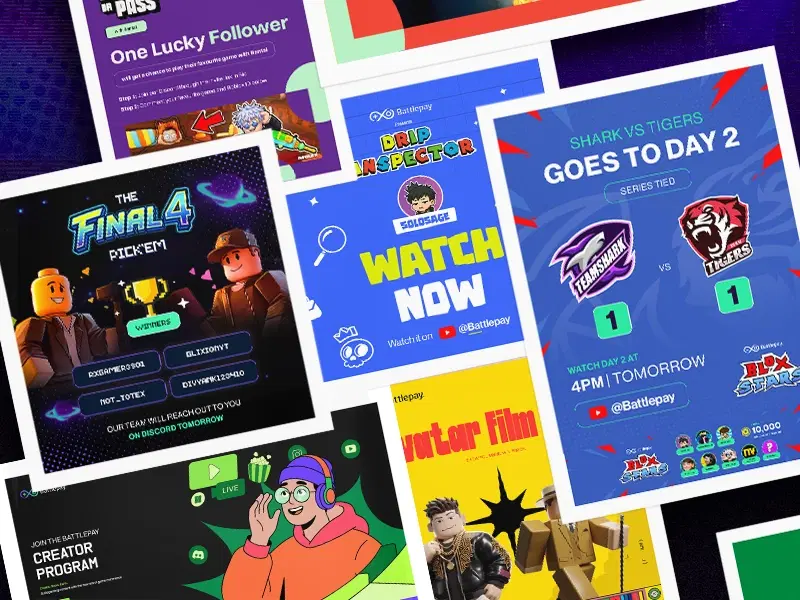
One of the earliest examples of that philosophy came through Battlepay's community initiatives. Drawing on years of experience working with gaming communities and esports events, Battlepay recognised that Roblox creators had largely been overlooked. Instead of treating them as another marketing channel, the company was among the first to actively invest in the space with original productions, tournaments and experiences that gave the community a platform to grow.
“When I say community, we're putting back the money we make into the community,” Romeo says. “We never wanted to become just a top-up website. We wanted to become a place where players could shop, compete and discover events.”
The approach came to life through initiatives like Blox Stars, Rising Stars and Rivals. Different formats, but the same objective: give players reasons to engage long after checkout.
“You know how you build a community?” he asks.
“You cater to the community that wants to be seen.”
That philosophy has been at the heart of Battlepay from the very beginning.
That's What Community Looks Like
For Battlepay, community isn't a campaign.
It's a long-term investment.
It means building trust before asking for loyalty. Creating opportunities before expecting returns. Giving players reasons to stay connected long after the purchase has been made.
For Vasu, it all comes back to one thing:
“The most important part is trust,” he says. “I want people to feel that whatever they do here, it's a trustworthy source.”
That's why the ambition was never to become just another top-up website.
It was to build a platform players wanted to return to, whether they were buying game top-ups, discovering creators, competing in events or finding a community they wanted to be part of.
Gaming doesn't end after a purchase.
Neither should gaming commerce.
Commerce brings players through the door.
Trust brings them back. Community gives them a reason to stay.
And if others choose to follow the same path?
“That's great,” Romeo says. “Maybe we taught the market something.
You can copy what we did. I don't think you can copy execution.”